As businesses grow, their daily operations become more complex. New customers are added, more employees join the team, and different departments begin handling multiple tasks at the same time.
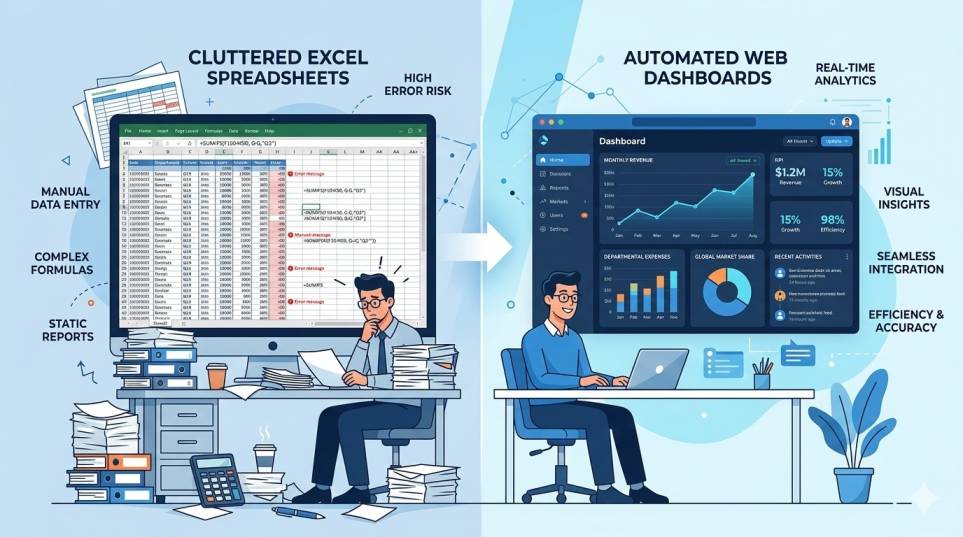
Many businesses manage these activities using Excel files, emails, messaging apps, and separate software tools. While this may work in the beginning, it often becomes difficult to manage as the organization grows.
Information becomes scattered across different files, reports take longer to prepare, and mistakes start appearing in important data.
A centralized management system helps solve these problems by bringing all important business operations into one platform. Instead of using multiple tools and files, businesses can manage their processes, data, and reports from a single system.
This approach improves efficiency, reduces errors, and helps managers make better decisions.
What is a Centralized Management System?
A centralized management system is a digital platform where a company manages its core operations in one place.
Instead of maintaining multiple spreadsheets or separate software for different tasks, all data is stored in a single system that employees can access based on their roles.
These systems are usually developed as web-based applications, allowing teams to work on the same platform from different locations.
Business data is commonly stored using database technologies such as SQL, which ensures secure storage, fast data access, and reliable reporting.
A centralized system makes it easier for organizations to organize their operations and maintain accurate information.
Common Business Functions Managed in a Centralized System
A well-designed centralized management system can handle many business activities in one platform. Instead of using different tools for different tasks, businesses can manage everything in a single system.
Below are some common functions that can be included.
Inventory Management
Inventory management allows businesses to track product stock levels, incoming inventory, and outgoing sales.
With a centralized system, managers can see real-time stock information and avoid problems like stock shortages or excess inventory.
Invoice and Billing Management
Invoices and bills can be generated directly from the system.
Businesses can easily manage:
- customer invoices
- payment records
- outstanding balances
- billing history
This ensures accurate financial tracking and reduces manual paperwork.
Employee Attendance Management
Employee attendance can be recorded digitally within the system.
Managers can monitor:
- daily attendance
- working hours
- leave records
- employee activity
This makes HR management easier and more transparent.
Salary and Payroll Management
Payroll calculations such as employee salaries, allowances, and deductions can be automated through the system.
Automation reduces manual payroll errors and saves time for HR departments.
Customer and Order Management
Customer information and order details can be stored in the system.
This allows businesses to easily track:
- customer profiles
- purchase history
- order status
- service records
Having this information in one place improves customer service and communication.
Operational Reporting
A centralized system can automatically generate operational reports.
These reports help businesses monitor performance and understand how different departments are functioning.
Problems Businesses Face Without a Centralized System
Businesses that rely on manual processes or disconnected tools often face several challenges.
Scattered Information
Important business data may be stored in different files or computers.
Employees spend time searching for the right information, which reduces productivity.
Manual Reporting
Many organizations still prepare daily or weekly reports manually using spreadsheets.
This process takes time and increases the chances of errors.
Data Errors and Duplicate Records
Manual data entry often leads to problems such as:
- incorrect calculations
- duplicate records
- missing data
These errors can affect reporting accuracy and decision-making.
Difficult Employee Training
When businesses use multiple tools and manual processes, training new employees becomes complicated.
New staff must learn several systems instead of working within one organized platform.
How a Centralized Management System Solves These Problems
A centralized system helps businesses streamline their operations and improve efficiency.
Centralized Data Management
All important information is stored in one place.
This makes it easier for employees to access accurate data and reduces confusion.
Reduced Human Errors
Automation reduces mistakes caused by manual processes.
The system can validate data entries, perform calculations automatically, and prevent duplicate records.
Faster Employee Training
When all operations are managed through one system, new employees can learn workflows quickly.
Training becomes simpler because employees only need to understand one platform.
Live Business Dashboards
Modern systems provide real-time dashboards that show important business information visually.
Managers can monitor key metrics such as:
- sales performance
- revenue trends
- operational performance
- pending tasks
Dashboards created using tools like Microsoft Power BI allow managers to analyze business data through charts and graphs.
Automated MIS Reporting
Centralized systems can generate automatic MIS reports using stored data.
Examples include:
- daily business reports
- financial summaries
- departmental performance reports
- operational analytics
Automation eliminates manual reporting work and ensures reports are always accurate.
Read More: What is MIS Automation?
Signs Your Business Needs a Centralized Management System
Many businesses may not realize they need a centralized system until operational problems begin affecting productivity.
Here are some signs that your business may need one.
- Your team uses many Excel files to manage daily operations
- Employees spend hours preparing reports manually
- Important data is stored in multiple places
- Managers struggle to get real-time business insights
- Manual errors frequently appear in reports or records
- Training new employees takes too much time
- Communication between departments is inefficient
If a business experiences several of these issues, implementing a centralized management system can significantly improve efficiency.
Real Example of a Centralized System
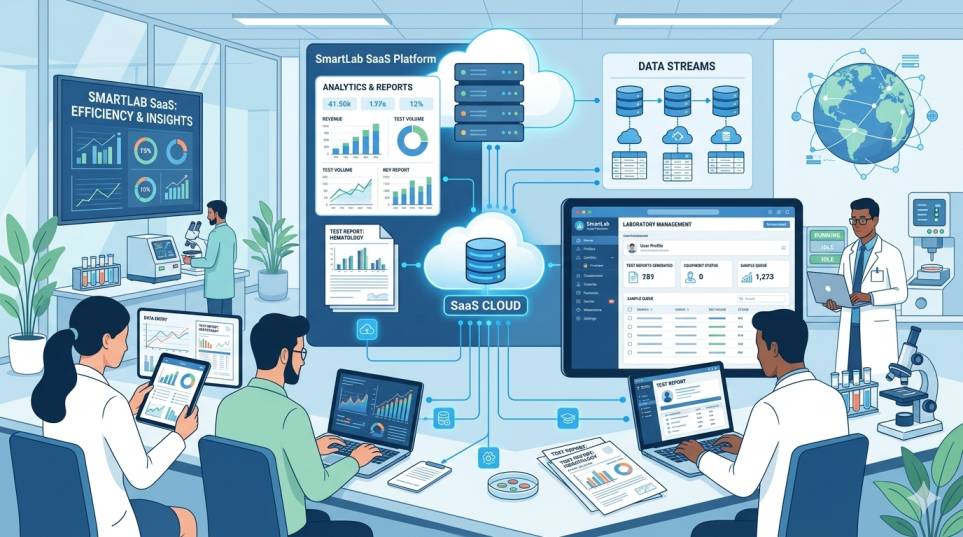
Consider a diagnostic laboratory.
The laboratory needs to manage:
- patient registration
- lab tests
- billing records
- report generation
- operational analytics
Without a centralized system, these tasks may be handled through multiple files and tools.
A centralized management system allows the lab to manage all these operations from one platform, reducing administrative workload and improving efficiency.
Visit: Smart Laboratory Management System
How SmartTejas Helps Businesses Build Centralized Systems
At SmartTejas, the goal is to help businesses simplify their operations by developing custom web-based management systems.
These systems are designed to bring different business processes together into one platform.
SmartTejas solutions focus on:
- centralized business data management
- automation of manual workflows
- custom MIS reporting systems
- live dashboards and analytics
- scalable web applications for business operations
By combining automation, reporting, and digital workflows, SmartTejas helps organizations reduce manual work and operate more efficiently.
Businesses can also integrate advanced analytics tools such as Microsoft Power BI to monitor performance and make data-driven decisions.
Long-Term Benefits for Businesses
Organizations that implement centralized systems often experience several long-term advantages.
These include:
- improved operational efficiency
- better data accuracy
- faster reporting
- improved management visibility
- easier scaling as the business grows
Over time, centralized systems help businesses transition from manual operations to modern digital workflows.
Conclusion
Managing business operations using scattered tools and manual processes can lead to inefficiencies, errors, and delays. As businesses grow, the need for organized systems becomes more important.
A centralized management system allows organizations to manage employees, customers, billing, inventory, reports, and operations from one platform.
With features such as automated MIS reports, live dashboards, and centralized data management, businesses can improve productivity and make better decisions.
By implementing modern digital solutions, organizations can simplify their processes and focus on growth.
SmartTejas aims to support this transformation by building reliable, scalable, and automation-focused management systems that help businesses operate more efficiently.
FAQs – Centralized Management System
How does it improve business efficiency?
It reduces duplication, saves time, and improves coordination.
What operations can be managed in one system?
Inventory, billing, attendance, salary, and reports etc.
Can it reduce manual errors?
Yes, automation reduces human mistakes
Is it suitable for small businesses?
Yes, it helps them scale efficiently.